 USA

Single-Zone vs. Multi-Zone Mini-Splits: Which Do You Need?
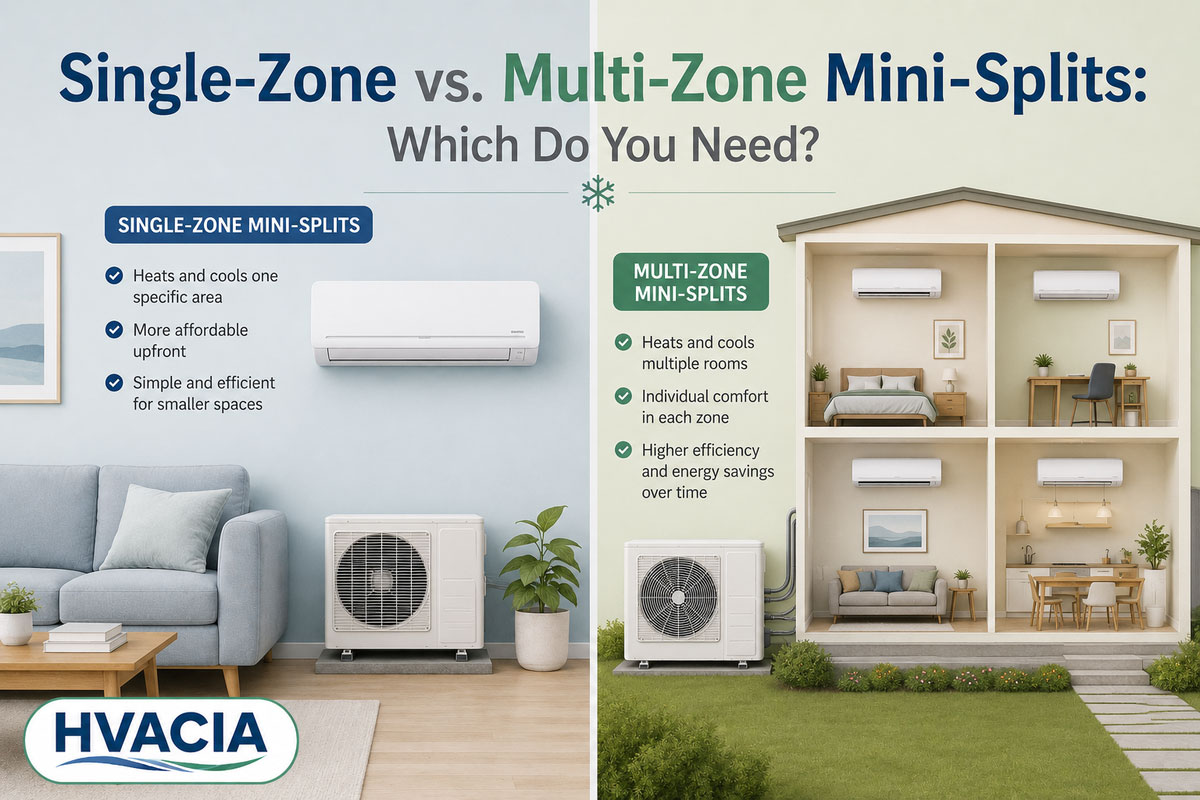
When a homeowner starts shopping for a ductless heat pump, the very first fork in the road isn't a brand or a BTU rating — it's this: single zone vs multi zone mini split. That one decision shapes everything downstream, from the size of your electrical panel upgrade to how much comfort control you'll have room by room. Get it right, and you'll spend the next fifteen years barely thinking about your HVAC system. Get it wrong, and you'll either be paying to heat and cool rooms nobody uses, or fighting with a single unit that can't keep every corner of the house comfortable.
This guide breaks down exactly how single-zone and multi-zone mini-split systems differ, where each one shines, what they cost to buy and run, and how to figure out which one actually fits your home — not just your budget on paper.
Mini-Splits 101: A Quick Refresher
A mini-split, sometimes called a ductless heat pump, moves heat rather than generating it. In cooling mode it pulls heat out of your indoor air and dumps it outside; in heating mode it reverses the cycle and pulls latent heat from the outdoor air (yes, even cold air) into your home. There's no ductwork, no furnace, and no central air handler — just a compact outdoor compressor unit connected by refrigerant lines to one or more indoor air handlers mounted on a wall, ceiling, or floor.
The "single vs. multi" question is really a question about how many indoor air handlers connect to one outdoor compressor. That distinction sounds simple, but it has real consequences for cost, efficiency, and how evenly your home feels conditioned.
What Is a Single-Zone Mini-Split?
A single-zone system pairs one outdoor condenser with exactly one indoor air handler. It's a closed, dedicated loop: one compressor sized specifically for one room or open area, running independently of anything else in the house.
Single-zone systems are the workhorses of additions, garages, sunrooms, and stubborn problem rooms. Consider a detached home office behind a house at 214 Willow Creek Drive in Austin, Texas — a converted garage that the original ductwork never reached. A single-zone mini-split solves that in an afternoon: one small outdoor unit tucked against the exterior wall, one indoor head mounted above the desk, and a three-inch conduit connecting the two. No trenching through drywall, no rerouting supply trunks.
Because the compressor is matched to a single space, single-zone systems tend to modulate more precisely. The outdoor unit's variable-speed compressor ramps up and down to match the exact heating or cooling load of that one room, which is part of why single-zone systems often post some of the highest efficiency ratings in the ductless category.
Best suited for:
- Home additions, ADUs, and converted garages
- Single problem rooms (the upstairs bedroom that's always hot, the sunroom that's always cold)
- Small apartments, studios, or accessory dwelling units
- Server rooms, wine cellars, or workshops needing independent climate control
- Homeowners who want the lowest possible upfront cost for one specific space
What Is a Multi-Zone Mini-Split?
A multi-zone system (also called a multi-split) connects one larger outdoor compressor to two, three, four, or even eight indoor air handlers, each installed in a different room and each with its own thermostat or remote control. One outdoor unit does the work that would otherwise require several separate single-zone systems.
Take a four-bedroom colonial at 350 Maple Ridge Court in Denver, Colorado, with no existing ductwork and a family that keeps very different schedules — teenagers who want their rooms cold at night, a home office that needs to stay comfortable during the day, and a primary suite that runs warm. A multi-zone system lets the homeowner run four indoor heads (bedrooms and office) off one outdoor condenser mounted along the side yard, with each zone set independently. The office can hold 70°F while a teenager's room runs at 66°F, all from the same compressor.
Multi-zone systems shine wherever a whole home — or a whole floor — needs individualized comfort without the expense of ductwork retrofits or multiple standalone outdoor units cluttering the exterior.
Best suited for:
- Whole-home or whole-floor retrofits without existing ducts
- Multi-family conversions where several rooms need independent control
- Additions that span more than one room (in-law suite with bedroom, bathroom, and living area)
- Homeowners who want fewer outdoor units and a cleaner exterior footprint
- Households with different comfort preferences by room or occupant
Single Zone vs Multi Zone Mini Split: Side-by-Side Comparison
| Feature | Single-Zone Mini-Split | Multi-Zone Mini-Split |
|---|---|---|
| Indoor units per outdoor compressor | 1 | 2–8 |
| Typical upfront cost | Lower ($2,500–$5,500 installed) | Higher ($7,000–$18,000+ installed) |
| Efficiency per zone | Often highest-in-class (SEER2 20+) | Slightly lower per zone due to shared compressor load |
| Zoning flexibility | None — one thermostat, one space | Independent control per room |
| Best for | One room, addition, or ADU | Multiple rooms or whole-home retrofit |
| Redundancy if compressor fails | Entire zone loses heating/cooling | All zones affected, but staged failure is rare |
| Installation complexity | Low — single line set | Moderate to high — multiple line sets, larger outdoor footprint |
| Exterior footprint | One small condenser | One larger condenser (replaces several small ones) |
| Ideal home type | Additions, single rooms, small units | Multi-room homes, whole-house retrofits, no ductwork |
| Long-term operating cost | Very low per room | Low overall, but higher total wattage draw |
The table makes the trade-off explicit: single-zone systems win on per-room efficiency and simplicity, while multi-zone systems win on whole-home coverage and exterior tidiness. Neither is universally "better" — the right answer depends entirely on how many rooms actually need independent conditioning.
Cost Breakdown: Upfront and Long-Term
Cost is usually where the single zone vs multi zone mini split decision gets made or broken.
A single-zone system with a 9,000–12,000 BTU capacity typically installs for somewhere between $2,500 and $5,500, including the outdoor condenser, one indoor air handler, line set, mounting, and labor. That number climbs with longer refrigerant line runs, difficult wall penetrations, or electrical panel upgrades.
A multi-zone system multiplies most of those line items. A 3-zone setup often runs $7,000–$11,000 installed; a 5-zone system can reach $14,000–$18,000 or more, depending on capacity per zone and the complexity of routing refrigerant lines to each room. It's worth noting that a multi-zone outdoor compressor is not simply "three single-zone compressors bolted together" — it's a purpose-built unit sized to handle combined loads, and its per-unit price is usually lower than buying that many standalone single-zone systems separately, even though the total project cost is higher because of the added indoor heads and labor.
Where multi-zone systems can save money over time is when a homeowner was seriously considering three or four separate single-zone systems for different rooms. In that comparison, one multi-zone compressor with four indoor heads is almost always cheaper — in both equipment and installation labor — than four fully separate single-zone systems.
Operating costs follow a similar logic. Both types of mini-splits are considerably more efficient than baseboard electric heat or older central air, largely because they use inverter-driven variable-speed compressors rather than the on/off cycling of conventional systems. The U.S. Department of Energy has published extensive guidance on how ductless heat pumps reduce energy use compared to resistance heating and older HVAC equipment. Single-zone units generally shave a few extra efficiency points off their multi-zone cousins because the compressor is dedicated to one load rather than juggling several rooms with different demand curves at once — but in practice, for most households, the difference shows up as a modest line item, not a dramatic one.
Efficiency and Performance Differences
Efficiency ratings for ductless systems are expressed through SEER2 (cooling) and HSPF2 (heating) numbers. Top single-zone units frequently reach SEER2 ratings in the low-to-mid 20s, some of the highest efficiency figures available in residential HVAC. Multi-zone systems, because the compressor has to serve multiple air handlers with potentially different simultaneous demands, typically land a bit lower — often still highly efficient, but rarely matching the ceiling that a purpose-built single-zone unit can hit.
That said, "lower per zone" doesn't mean "inefficient." Multi-zone systems still vastly outperform ducted central systems in most efficiency comparisons, largely because they eliminate duct losses entirely — and duct leakage in a typical home can waste a meaningful share of conditioned air before it ever reaches a vent, according to figures published by ENERGY STAR. When comparing single zone vs multi zone mini split efficiency, the more useful question isn't "which type is more efficient in a vacuum" — it's "which configuration avoids conditioning rooms that don't need it." A multi-zone system that lets you power down three empty bedrooms while keeping the living room comfortable will often beat a single powerful system trying to blanket the whole floor.
For anyone comparing specific models, checking the AHRI Directory allows you to verify certified efficiency ratings for both single-zone and multi-zone combinations before making a purchase — manufacturer marketing numbers and certified AHRI-matched combination numbers don't always align.
Installation Complexity and Timeline
Single-zone installations are refreshingly straightforward. One refrigerant line set, one indoor head, one small hole through the exterior wall, and — assuming reasonable electrical capacity already exists — most installers can complete the job in a single day. That simplicity is a large part of why single-zone systems are the default recommendation for additions, garage conversions, and one-off problem rooms.
Multi-zone installations take more planning. Each indoor air handler needs its own refrigerant line run back to the outdoor unit, and those lines have to be routed through walls, attics, or crawl spaces without excessive bends or length — most multi-zone compressors have a maximum total line-set length and a maximum number of bends specified by the manufacturer. A poorly planned multi-zone install can lose efficiency and reliability if lines are routed inefficiently. Installers also need to size the outdoor compressor correctly against the combined connected capacity of all the indoor heads, since running every zone at maximum simultaneously is rarely (by design) fully supported at 100% of each unit's rated capacity — a detail worth asking your installer about directly, since undersizing a multi-zone compressor is one of the more common installation mistakes.
Expect a multi-zone install to take two to four days depending on the number of zones, the layout of the home, and whether any electrical service upgrades are required to support the larger compressor's amperage draw.
Zoning Control, Comfort, and Noise
This is where the single zone vs multi zone mini split decision often comes down to lifestyle rather than math. A single-zone system gives you exactly one thermostat and one comfort setting for that space — perfectly fine when the space in question is, say, a single home office or a garage workshop, but limiting if you were hoping it could also handle the guest room down the hall.
Multi-zone systems hand each room its own remote or app-based thermostat, letting a couple with genuinely different temperature preferences each get what they want without a single argument over the thermostat. That said, multi-zone systems introduce a small trade-off: because all indoor units share one compressor, extreme simultaneous demand across every zone (all rooms calling for maximum heating on the coldest night of the year, for example) can occasionally mean the system prioritizes based on total connected load rather than treating every zone as if it had its own dedicated compressor. In everyday use this is rarely noticeable, but it's worth understanding before assuming a multi-zone system behaves exactly like several single-zone systems bolted together.
On noise, both configurations perform well by HVAC standards — indoor air handlers typically run in the high-20 to low-40 decibel range, quieter than most central air vents. Outdoor units for multi-zone systems are physically larger and can run a few decibels louder than a small single-zone condenser, which matters if the compressor location is near a bedroom window or a neighbor's property line.
Maintenance and Repair Considerations
Maintenance on both system types is similar in kind: periodic filter cleaning (often monthly to quarterly depending on air quality), annual coil cleaning, and refrigerant charge checks every few years. Where the two diverge is risk exposure. If a single-zone compressor fails, you lose conditioning in exactly one room — inconvenient, but contained. If a multi-zone compressor fails, every connected zone loses heating and cooling simultaneously, since they all depend on the same outdoor unit. That's a meaningful consideration for households relying on a multi-zone system as their sole source of comfort across several rooms, and it's part of why some homeowners in colder climates choose to pair a multi-zone system with a backup heat source for at least one critical room.
Finding a qualified technician matters more with multi-zone systems, given the added complexity of multiple line sets and combined-load compressors. The North American Technician Excellence certification directory is a reasonable starting point for locating installers credentialed specifically in heat pump and ductless system service.
Real-World Scenarios: Which Homeowners Choose What
A few composite scenarios illustrate how the decision typically plays out in practice.
The Backyard Studio. A homeowner at 88 Beacon Hill Road in Boston, Massachusetts converts a detached garage into a music studio. One room, no shared walls with the main house, and a modest 250-square-foot footprint. A single-zone system, sized around 9,000 BTU, handles it completely — no reason to pay for a multi-zone compressor's added capacity or installation complexity for a single enclosed space.
The No-Duct Ranch. A 1970s single-story ranch at 47 Pinecrest Avenue in Portland, Oregon never had central air installed. The owners want cooling in the living room, primary bedroom, and two secondary bedrooms — four rooms total, each with different sun exposure and different occupancy schedules. A 4-zone multi-split, with one outdoor compressor tucked along the side of the house, delivers independent comfort in all four rooms without four separate outdoor units crowding the yard.
The Loft Conversion. An open-concept loft at 12 Harbor View Lane in Charleston, South Carolina has one large great-room space with no interior walls to speak of. Despite being a "whole floor" project, it functions more like a single zone architecturally — one big volume of air. A single, well-placed, higher-capacity single-zone unit (or two units on the same zone paired to a single larger compressor, depending on square footage) often outperforms a multi-zone approach here, since there's no benefit to independent room-by-room control in a room that is, structurally, one room.
The Multi-Generational Household. A house at 350 Maple Ridge Court in Denver, Colorado (referenced earlier) houses three generations under one roof — grandparents who run cold, teenagers who run hot, and a home office that needs daytime-only conditioning. This is close to the textbook case for multi-zone: distinct comfort needs, distinct schedules, and enough rooms that separate single-zone systems would mean four outdoor condensers cluttering the exterior and four times the installation labor.
The pattern across all four scenarios: it's rarely about square footage alone. It's about how many genuinely independent comfort needs exist under one roof.
Decision Framework: How to Choose the Right System for Your Home
A few honest questions tend to cut through the noise faster than any spec sheet:
How many rooms actually need independent temperature control? One room, clearly a single-zone job. Two or more rooms with different occupants, schedules, or sun exposure, lean multi-zone.
Is this an addition to an existing HVAC system, or a whole-home retrofit? Single-zone systems pair beautifully with an existing central system, covering just the one room ducts never reached. Multi-zone systems make more sense as a wholesale replacement or as the primary system for a home with no ductwork at all.
What's the budget ceiling, and is it a one-time cost or a phased project? Some homeowners install one single-zone unit now and add a second later, effectively building toward multi-zone coverage over a few years rather than committing to the full system cost upfront. This is a legitimate strategy — just confirm with your installer whether the initial condenser can support future line additions, since not every single-zone outdoor unit is designed for future expansion.
How much does exterior space and aesthetics matter? If HOA rules, sightlines, or a small side yard make multiple condensers impractical, one multi-zone compressor consolidates the footprint considerably.
What's the failure tolerance? If losing conditioning across several rooms simultaneously during a repair would be a serious problem, some homeowners split larger homes across two smaller multi-zone systems (say, two 2-zone units) rather than one large 4-zone system, trading a bit of installation efficiency for redundancy.
Frequently Asked Questions
Is a multi-zone mini-split cheaper than installing multiple single-zone systems? Generally yes, when you're comparing it against buying several complete single-zone systems for several different rooms. One multi-zone compressor with shared outdoor equipment and combined labor is typically less expensive than three or four fully separate single-zone installations.
Can you add zones to a multi-zone system later? Some multi-zone compressors are designed with extra capacity for future indoor units, but many are sized precisely for the zones installed at the time. Confirm expansion capability with your installer before assuming you can add a zone down the road.
Which is more efficient, single-zone or multi-zone? Per-zone efficiency ratings often favor single-zone systems slightly, since the compressor serves one dedicated load. In practice, whole-home efficiency often favors whichever configuration avoids conditioning empty or unused rooms — which can go either way depending on the household.
Do multi-zone systems require a bigger electrical service? Often, yes. Larger outdoor compressors supporting several indoor units typically draw more amperage than a small single-zone condenser, so an electrical panel evaluation is a standard part of any multi-zone installation quote.
Can one multi-zone system heat and cool at the same time in different rooms? Most standard multi-zone systems run all connected zones in the same mode (all heating or all cooling) at once. Systems capable of simultaneous heating in one zone and cooling in another exist but are a specialized category with a higher price point — worth asking about explicitly if that flexibility matters to your household.
Is a single-zone system enough for a whole small apartment? For a studio or one-bedroom apartment under roughly 500–600 square feet with an open layout, a single well-sized unit can often condition the entire space effectively, especially if there are no closed-off rooms blocking airflow.
The Bottom Line
The single zone vs multi zone mini split decision isn't really about which system is "better" in the abstract — it's about matching the number of independent comfort zones in your home to the number of indoor air handlers you actually install. One stubborn room or a standalone addition almost always calls for a single-zone system: lower cost, simpler installation, and often the highest efficiency numbers in the category. A home with several rooms that need independent control, especially one without existing ductwork, tends to come out ahead with a multi-zone system, consolidating what would otherwise be several separate outdoor units into one compressor and one cleaner installation.
Before committing either way, it's worth getting quotes for both configurations from a licensed HVAC contractor who can do a proper load calculation for each room in question — a system sized on guesswork, single-zone or multi-zone, rarely performs as well as one sized on an actual Manual J calculation for the specific space.