 USA

Do Heat Pumps Work in Cold Climates? What to Know Before Buying
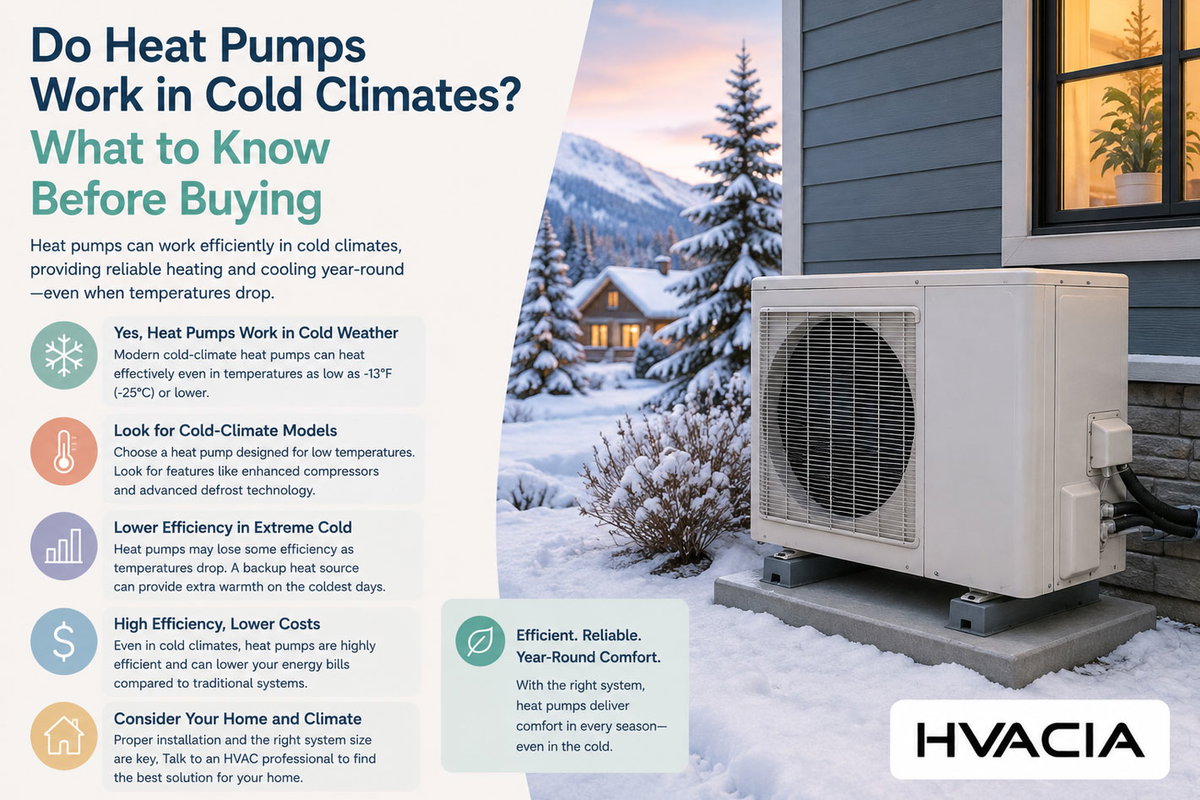
There's a story that refuses to die in the world of home heating: heat pumps are fine for mild places like Georgia or coastal California, but the moment the mercury drops below freezing, they throw up their hands and quit. It's a tidy narrative. It's also increasingly wrong. The people saying it most confidently are often repeating something they heard a decade ago, back when the technology genuinely did struggle in serious cold. Since then, the engineering has moved faster than the folklore.
If you're weighing a heat pump for a house in Minnesota, Maine, Michigan, or anywhere else that treats January as a personal insult, this guide walks through what actually happens inside these machines when it's cold, what the field data says, how to read the spec sheet like someone who's done this before, and what questions separate a good installation from a regretted one.
The Myth That Won't Die: Why People Think Heat Pumps Fail in the Cold
The skepticism isn't baseless — it's just outdated. Older heat pump models, especially the single-speed units common through the 1990s and 2000s, really did lose a lot of their punch below 30°F. Their compressors ran at one speed only: full blast or off. As outdoor temperatures fell, the refrigerant had less heat to pull from the air, capacity dropped, and many systems needed electric resistance backup coils to fill the gap. Homeowners who bought those units, watched their electric bills spike during cold snaps, and told everyone at the hardware store that heat pumps "don't work up here."
That story got frozen in place, pun intended, and it's been repeated in home inspection reports, HVAC forums, and family group chats ever since. Meanwhile, the equipment quietly transformed. The heat pumps sold today under labels like "cold-climate" or "hyper-heat" are, mechanically, a different animal from what your uncle installed in 2003.
How a Heat Pump Actually Makes Heat When It's Freezing Outside
To understand why cold-climate performance is now possible, it helps to strip away the mystery around what a heat pump does. It doesn't generate heat the way a furnace burns fuel. It moves heat from one place to another, using the same refrigeration cycle that runs your refrigerator, just in reverse.
Refrigerant circulating through the outdoor unit absorbs heat from the outside air — yes, even air that feels bitterly cold still contains thermal energy, all the way down to absolute zero, which is roughly -460°F. A compressor pressurizes that refrigerant, which raises its temperature significantly, and the hot refrigerant is routed indoors, where it releases that heat into your living space. The refrigerant then cycles back outside to repeat the process.
The physics holds up in cold weather. What changes is efficiency: the colder the outdoor air, the smaller the temperature difference the system can exploit, and the harder the compressor has to work to extract useful heat. Older single-speed compressors simply weren't built to work that hard efficiently. Newer ones are.
The Real Technology Breakthrough: Cold-Climate Heat Pumps
Three engineering shifts explain most of the gap between the heat pumps people remember and the ones being installed now.
Variable-Speed Compressors
Instead of one gear, modern cold-climate compressors have a wide range, often adjusting output continuously rather than in fixed stages. In mild weather they idle along at low output, sipping electricity and avoiding the on-off cycling that wastes energy. When temperatures drop, they ramp up, sometimes running at more than 100% of their rated capacity for short bursts, a trick made possible by better motor control electronics. This flexibility is the single biggest reason modern units keep delivering heat well below 0°F.
Enhanced Vapor Injection (EVI)
This is a refrigeration circuit trick that essentially gives the compressor a second injection of refrigerant partway through the compression cycle, boosting capacity and efficiency specifically at low outdoor temperatures. It's become close to standard in serious cold-climate models from major manufacturers, and it's a large part of why these units can maintain a much higher percentage of their rated capacity at, say, 5°F instead of falling off a cliff.
Better Refrigerants and Coil Design
Manufacturers have also redesigned outdoor coils to be larger and more efficient at capturing heat from cold air, and refrigerant blends have been tuned for cold-weather performance rather than just warm-climate cooling. None of this is flashy, but cumulatively it's the difference between a heat pump that becomes a glorified space heater at 20°F and one that still does most of the work at -10°F.
What the Data Actually Shows in Real Cold Climates
Skepticism deserves real numbers, not just marketing claims, so it's worth looking at how these systems have performed in genuinely brutal climates.
Maine has become something of a proving ground. The state has installed heat pumps aggressively over the past decade specifically because winter fuel oil costs are brutal, and monitoring studies by state agencies and independent researchers have found that modern cold-climate units maintain meaningful heating capacity through the coldest days the state sees, with many homeowners reporting the systems as their primary heat source rather than a supplement.
In Minnesota, utility-sponsored field studies of cold-climate air-source heat pumps have tracked performance through winters with sustained sub-zero stretches, generally finding that well-sized units continue producing useful heat down to design temperatures in the -10°F to -15°F range, with efficiency (not raw output) declining as temperatures drop, which is expected physics rather than equipment failure.
Norway and Sweden, both colder on average than most of the northern U.S., have among the highest per-capita heat pump adoption rates in the world. That's not an accident or a fluke of subsidy policy alone — it reflects decades of field experience showing the technology holds up.
None of this means every heat pump works in every cold climate. It means the right heat pump, correctly sized and installed, now genuinely competes with — and often beats — fossil fuel systems in places that get seriously cold.
Comparison Table: Standard vs. Cold-Climate Heat Pumps vs. Traditional Furnace
| Feature | Standard Heat Pump | Cold-Climate Heat Pump | Gas/Oil Furnace |
|---|---|---|---|
| Rated capacity at 5°F | Often drops to 50–65% of rated output | Typically maintains 70–100%+ of rated output | Not affected by outdoor temp |
| Lowest effective operating temp | Around 20–25°F before backup heat needed | Functions down to -13°F to -25°F depending on model | Works at any outdoor temp |
| Compressor type | Single-speed or two-stage | Variable-speed with vapor injection | N/A |
| Backup heat typically required | Yes, in most cold climates | Sometimes, as a supplement for extreme outliers | N/A |
| Efficiency metric | HSPF2 roughly 7.5–8.5 | HSPF2 roughly 9–13+ | AFUE roughly 80–98% |
| Upfront cost (typical ducted system) | Moderate | Higher | Lower to moderate |
| Operating cost in cold climate | Can be high if undersized or paired with resistance backup | Generally lower than fossil fuel in most regions | Stable but tied to fuel prices |
| Cooling capability | Yes, dual function | Yes, dual function | No, heating only |
| Carbon footprint | Lower than combustion, depends on grid | Lower than combustion, depends on grid | Higher, direct combustion emissions |
| Lifespan | 12–15 years typical | 12–15 years typical, often built more robustly | 15–20 years typical |
| Available incentives (U.S.) | Some | Often the highest tier of federal/state rebates | Generally fewer or none |
This table is a starting point, not gospel — actual numbers vary by manufacturer, model, and installation quality. But the pattern holds across most product lines: the cold-climate category exists specifically to close the performance gap that gave standard heat pumps their reputation problem.
Key Numbers to Check Before You Buy
Marketing brochures love the word "efficient." Spec sheets tell you what that actually means. A few figures matter more than the rest when you're evaluating cold-climate performance specifically.
HSPF2 (Heating Seasonal Performance Factor) measures seasonal heating efficiency under the newer, more realistic testing standard. Higher is better. For genuinely cold climates, look for HSPF2 ratings in the 9-and-up range, with the best cold-climate models reaching into the low-to-mid teens.
COP at low temperatures (often listed at 5°F or 17°F) tells you how much heat the unit produces per unit of electricity consumed at that specific outdoor temperature, rather than as a seasonal average. This is the number that actually answers "will this still work when it's genuinely cold," because seasonal averages can hide poor cold-weather performance behind strong shoulder-season numbers.
Capacity retention at 5°F, sometimes expressed as a percentage of rated capacity, is one of the clearest single indicators separating true cold-climate units from units wearing the label loosely. A system that retains 80% or more of its capacity at 5°F is doing real work in real cold. One that drops to 50% is leaning heavily on backup heat, which is usually electric resistance, the least efficient (and most expensive to run) way to heat a home.
The ENERGY STAR Cold Climate designation is a useful shortcut, since it requires manufacturers to meet specific low-temperature capacity and efficiency thresholds rather than just general efficiency benchmarks. Not every good cold-climate unit carries this label, but units that do have cleared a meaningful bar.
Sizing Matters More in Cold Climates Than Almost Anywhere Else
An oversized furnace is annoying — it short-cycles, wears out faster, and creates temperature swings. An oversized or undersized heat pump in a cold climate is a much bigger problem, because sizing decisions ripple directly into how much backup heat you'll need and how comfortable the house feels during the coldest week of the year, which is exactly when comfort matters most.
Proper sizing requires a Manual J load calculation, not a rule of thumb based on square footage, and definitely not a straight one-to-one swap for whatever furnace or boiler previously heated the house. A contractor who quotes a heat pump size without walking through your home's insulation levels, window performance, air sealing, and local design temperature is skipping a step that matters enormously in a cold climate, far more than it would in a place where the heat pump barely has to work hard most of the year.
Design temperature is worth understanding specifically: it's not the coldest day on record, it's a statistically representative cold value (often the 99% or 99.5% design temperature) used by engineers to size equipment so it performs well on nearly all days without being wildly oversized for the handful of extreme outliers.
Backup Heat: Do You Still Need It?
This is one of the most common points of confusion, and the honest answer is: it depends on your specific climate, your specific equipment, and how the system is sized.
In much of the northern U.S. and southern Canada, a correctly sized modern cold-climate heat pump can serve as the sole heat source down to very low temperatures, with backup only kicking in during unusually extreme cold snaps that fall outside normal design conditions. In places with more severe design temperatures — parts of interior Alaska, northern Minnesota, or similarly extreme regions — pairing the heat pump with a backup system (electric resistance, a small furnace, or occasionally a wood stove) is a reasonable and common design choice rather than a sign that the heat pump "failed."
The mistake to avoid is treating backup heat as the primary plan while the heat pump handles the easy months. That arrangement produces exactly the bad experience that built the old reputation: high bills from resistance heat doing more work than it should, because the heat pump was undersized or the backup threshold was set too conservatively by an installer being cautious rather than precise.
Real Cost Breakdown: What to Actually Expect
Cost conversations around heat pumps tend to get muddled because installation cost, operating cost, and incentive value all get mentioned in the same breath without being separated clearly.
Installation cost for a ducted cold-climate heat pump system typically runs higher than a comparable standard heat pump and can be comparable to or somewhat higher than a high-efficiency furnace, particularly once ductwork modifications, electrical panel upgrades, or a cold-climate-rated outdoor unit are factored in. Ductless (mini-split) cold-climate systems can be more affordable per zone but add up quickly in larger homes needing multiple heads.
Operating cost is where the calculus usually favors heat pumps, especially in regions with expensive heating oil or propane, since electricity-per-unit-of-heat delivered is frequently cheaper than combustion fuels once the heat pump's efficiency multiplier is factored in. Homes on natural gas in regions with low gas prices sometimes see closer parity, and the comparison is genuinely regional — a Vermont home switching off oil sees a very different math than a Midwest home switching off cheap natural gas.
Incentives have shifted the math substantially in the U.S. Federal tax credits, state rebate programs, and utility incentives — many specifically targeting cold-climate-rated equipment — can meaningfully reduce upfront cost. These programs change year to year and vary by state and utility territory, so checking current, location-specific incentive levels before budgeting is worth the twenty minutes it takes.
Questions to Ask Your Installer Before Signing Anything
A good cold-climate heat pump installation depends more on installer competence than on any single spec sheet number. A short list of questions tends to separate installers who specialize in this from those who are comfortable but not necessarily expert:
Has your company completed a Manual J load calculation for this specific home, or is the sizing based on the existing furnace's capacity? Ask to see the calculation, not just be told it happened.
What is this unit's rated capacity at 5°F and at your local design temperature specifically, not just its nameplate rating at 47°F, which is a mild-weather benchmark that tells you little about cold performance?
At what outdoor temperature does backup heat engage, and how was that threshold determined for this house? A thoughtful answer references the load calculation and design temperature, not a generic default setting.
How many cold-climate heat pump systems has your team installed in this region specifically, and can they speak to how those systems have performed through an actual winter, not just at commissioning?
What's the warranty on the compressor specifically, since that's the most expensive component to replace, and cold-climate compressors work harder than standard ones?
Where to Verify Before You Buy
Marketing materials from equipment manufacturers and even from installers, however well-intentioned, aren't neutral sources. A few organizations publish independent, verifiable information worth checking directly.
ENERGY STAR — run jointly by the U.S. Environmental Protection Agency and Department of Energy — maintains a certified product list specifically for cold-climate heat pumps, filtered by capacity retention and efficiency thresholds rather than marketing claims. Address: 1200 Pennsylvania Avenue NW, Washington, DC 20460
The U.S. Department of Energy publishes consumer guidance on heat pump sizing, efficiency ratings, and available federal incentive programs, and is a reliable source for how HSPF2 and COP ratings are actually calculated. Address: 1000 Independence Avenue SW, Washington, DC 20585
NEEP — the Northeast Energy Efficiency Partnerships — maintains one of the most detailed independent databases of cold-climate air-source heat pump models, with performance data organized specifically around low-temperature capacity, which is exactly the metric this article has been emphasizing. Address: 81 Hartwell Avenue, Lexington, MA 02421
The Cold Climate Housing Research Center in Fairbanks, Alaska, studies building performance in genuinely extreme cold and publishes field research on heat pump performance in one of the harshest climates in North America, which makes their findings a useful sanity check against manufacturer claims. Address: 955 Draanjik Drive, Fairbanks, AK 99775
Cross-referencing a specific model against at least one of these sources before purchase takes very little time and can prevent buying equipment that looks good on a glossy brochure but underperforms once winter actually arrives.
The Bottom Line
The old story that heat pumps quit working in cold climates was true enough, once, to earn its reputation. It's no longer an accurate description of the equipment being sold under the cold-climate or hyper-heat label today. Variable-speed compressors, vapor injection, and redesigned coils have closed most of the gap that used to exist, and field data from places that take winter seriously — Maine, Minnesota, Scandinavia — backs that up.
What separates a good outcome from a bad one isn't really "heat pump versus furnace" anymore. It's whether the specific unit was chosen based on real low-temperature performance data, whether it was sized using an actual load calculation rather than a guess, and whether the installer understood the difference between a mild-climate installation and a cold-climate one. Get those three things right, and a heat pump in a genuinely cold place is no longer a gamble — it's an appliance doing exactly what modern engineering built it to do.