 USA

Do Air Purifiers Help with Allergies and Asthma? What the Research Actually Says
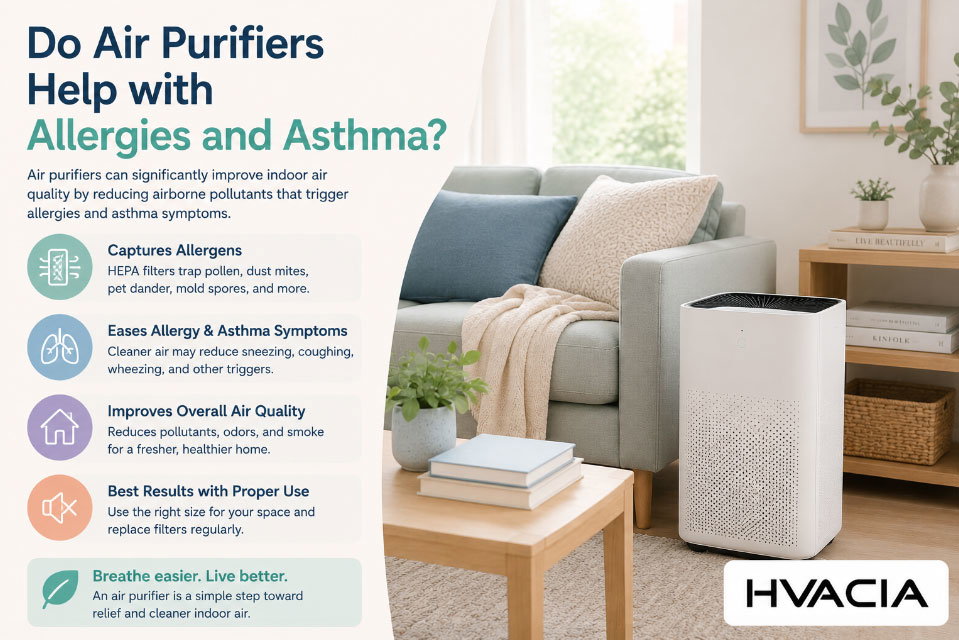
Somewhere around 2 a.m., a lot of people with allergies or asthma are wide awake, propped up on two pillows, listening to their own breathing. Eyes itching. Chest a little tight. A box fan running in the corner because somebody, somewhere, once said moving air might help. The question that usually follows the next morning, half-typed into a phone, is some version of: does an air purifier actually help with allergies and asthma, or is it just an expensive humming box on the nightstand?
The honest answer lives in the space between "yes" and "it depends," and that space is worth exploring properly, because a device that costs anywhere from $60 to $900 deserves more than a marketing headline.
This piece walks through what air purifiers actually do inside a room, what decades of clinical research say about allergy and asthma symptoms, where the technology falls short, and how to choose one that's worth the counter space — grounded in guidance from the U.S. Environmental Protection Agency, the Asthma and Allergy Foundation of America, the American Lung Association, and peer-reviewed clinical literature.
The Short Answer: Yes, With Real Caveats
A properly sized HEPA air purifier can measurably reduce airborne allergens — pollen, pet dander fragments, dust mite debris, and mold spores that are still floating rather than already settled on surfaces. Multiple controlled studies link portable HEPA air cleaners to modest improvements in allergy and asthma symptoms for at least some patients, some of the time.
Quick-reference version, for anyone skimming:
- Air purifiers help with allergies and asthma by removing small airborne particles — but the effect is modest, not dramatic.
- HEPA filtration is the technology with the most consistent evidence behind it.
- Ionizers, ozone generators, and most UV add-ons have weak or nonexistent evidence for allergy and asthma relief, and some carry their own risks.
- An air purifier is a supplement, not a replacement, for cleaning, humidity control, and prescribed medication.
What air purifiers cannot do is replace the basics: washing bedding weekly, vacuuming with a HEPA-filter vacuum, controlling humidity and mold at the source, keeping pets out of bedrooms, and taking prescribed allergy or asthma medication as directed. The EPA is direct about this in its own consumer guidance — air cleaners supplement source control and ventilation; they don't substitute for either.
So: air purifiers help with allergy and asthma symptoms in a real, documented, but modest way. They're one tool in a toolbox, not a cure sitting on a shelf.
Why Indoor Air Quality Is a Bigger Deal Than It Sounds
People spend roughly 90% of their time indoors — a figure AAFA president and CEO Kenneth Mendez has cited when explaining why the certification group cares so much about what circulates inside a house. The EPA has separately ranked indoor air pollution among the top five environmental health risks in the country, not because homes are inherently filthy, but because pollutants generated indoors — cooking exhaust, pet dander, dust mite waste, mold spores, tracked-in pollen — get trapped rather than diluted the way they would outside.
For someone with healthy airways, that trapped air is a minor inconvenience. For someone with allergic rhinitis or asthma, it can function like a trigger factory running around the clock, often concentrated most heavily in the one room — the bedroom — where a person spends the longest uninterrupted stretch of time.
That's the practical case for taking air purifiers seriously in the first place: not because average indoor air is dangerous, but because certain rooms, certain seasons, and certain households concentrate specific triggers well beyond what an already-sensitized immune system or airway can shrug off comfortably.
How Air Purifiers Actually Work
Not all air purifiers are built the same way, and the differences matter enormously for allergy and asthma sufferers specifically.
HEPA Filtration — The Workhorse
A true HEPA (High-Efficiency Particulate Air) filter is rated to capture at least 99.97% of airborne particles measuring 0.3 microns, according to the EPA and the American College of Allergy, Asthma & Immunology (ACAAI). That size range happens to include most pollen grains, pet dander fragments, dust mite fecal particles, and mold spores — the small, still-airborne allergens that matter most for allergic disease. HEPA is a purely mechanical, passive-filtration technology: no chemicals, no byproducts, just a dense maze of fibers that particles physically can't pass through.
Activated Carbon — For Smells and Gases, Not Allergens
Activated carbon filters are excellent at adsorbing odors, smoke particles, and volatile organic compounds, but they don't meaningfully trap the physical particles that trigger allergies. Many combination units pair a carbon layer with a HEPA layer specifically because the two technologies solve different problems.
Ionizers and Electrostatic Precipitators — Proceed Carefully
Ionizing purifiers charge airborne particles so they settle onto surfaces or a collector plate, rather than trapping them in a filter the way HEPA does. The catch: particles that get charged but don't settle can remain airborne, and in some cases resettle in ways that irritate the respiratory tract further. Ionizers can also generate ozone as a byproduct — a documented lung irritant that's been associated with worsened, not improved, asthma symptoms.
Ozone Generators — Not Air Purifiers At All
Devices explicitly sold as "ozone generators" intentionally produce ozone gas to try to neutralize odors and pollutants. The EPA does not recommend these for occupied homes; ozone is a lung irritant regardless of the marketing language wrapped around it, and it has no established benefit for allergy or asthma symptoms. If a product's own packaging brags about ozone output, it belongs nowhere near a household with respiratory sensitivities.
UV-C and Photocatalytic Oxidation — Overhyped Add-Ons
UVGI (ultraviolet germicidal irradiation) can theoretically damage biological material like mold spores and bacteria as they pass a UV lamp, but the EPA notes there are no studies to date linking home UVGI or photocatalytic oxidation (PCO) systems to reduced allergy or asthma symptoms. Worse, dead mold spores can still trigger allergic reactions even after UV exposure kills them, so these features often add cost without adding relief.
What the Scientific Evidence Really Shows
This is the part marketing copy tends to skip, and it deserves the most honesty.
A systematic review published in the journal CHEST pooled ten randomized controlled trials covering 216 patients with asthma and found that, overall, people using air filtration reported fewer symptoms than those who didn't — a real, if modest, signal in favor of the technology.
A 2011 review in Current Allergy and Asthma Reports by allergist James Sublett examined whole-house HVAC filtration, HEPA sleep-zone devices, and standalone HEPA room units, concluding that all three approaches provide varying degrees of benefit for allergic respiratory disease, with the size of that benefit differing by study and by patient population.
More recent evidence stays similarly mixed rather than glowing. A 2024 meta-analysis in the journal Indoor Air, focused on allergic rhinitis, found that in one trial pairing HEPA filtration with regular home cleaning, dust-mite allergen levels and nasal symptom scores both improved meaningfully. In a separate trial, airborne particle counts dropped by nearly 70%, yet symptom scores for sneezing, congestion, and itchy eyes showed no statistically significant improvement over regular cleaning alone.
A broader review compiled for the Agency for Healthcare Research and Quality, covering 60 randomized controlled trials of allergen-reduction strategies — air filtration among them — concluded that the evidence for any single intervention reliably improving asthma outcomes remains inconclusive, echoing earlier Cochrane-affiliated reviews on the same question. That review flagged one promising combination worth noting: pest control paired with HEPA vacuuming, though that's a somewhat different intervention than a standalone air purifier running quietly in a bedroom.
None of this means air purifiers are snake oil. It means the research paints a picture of a genuinely useful, moderately effective supporting tool rather than a guaranteed fix — which, frankly, tracks with how most chronic allergy and asthma management actually works. No single intervention does all the work by itself.
One modeling study is worth calling out because it clarifies where air purifiers shine versus where they fall short. Researchers using a NIST-developed indoor air quality model found that whole-house, in-duct HVAC filtration with high-efficiency filters reduced cat allergen levels by 30–55%, fungal spore levels by 50–75%, and airborne infection risk by 90–99%, outperforming standalone portable units at a whole-house scale — though portable HEPA units remain the more practical, more effective choice for cleaning the air in a single bedroom or nursery rather than an entire house.
Air Purifiers and Allergies: What They Fix, and What They Can't
Air purifiers are genuinely effective against allergens that stay suspended in the air: pollen tracked in on clothing, pet dander light enough to float, mold spores actively circulating, and the fine fraction of dust mite waste that hasn't settled yet.
They're far less effective against allergens that have already settled onto carpet, bedding, upholstery, and curtains — which, physically, is most of the allergen load in a typical home at any given moment. The EPA's own consumer guidance notes that larger particles settle out of the air quickly, faster than any filter can capture them, which is exactly why weekly hot-water bedding washes, frequent vacuuming with a HEPA-filter vacuum, and regular dusting remain non-negotiable even in a household running a purifier around the clock.
Mold is its own special case. An air purifier can capture spores that are actively airborne, and may help with musty odors along the way, but it does nothing to address an active moisture problem growing behind a wall or under a sink. Fixing the leak and physically remediating the mold is the only real solution there; the purifier is cleanup, not repair.
Air Purifiers and Asthma: Trigger Reduction, Not a Cure
Asthma is a chronic inflammatory airway disease, and no air purifier changes that underlying biology. What air purifiers can plausibly do is reduce exposure to several well-documented asthma triggers: pet allergens, dust mite particles, mold spores, wildfire and tobacco smoke particles, and some fraction of the fine particulate pollution that drifts in from outdoors.
The CDC's asthma-control guidance leans heavily on environmental trigger reduction as one pillar of asthma management, alongside correct medication use, avoiding smoke exposure, keeping indoor humidity below 50%, and addressing pest and mold problems at the source. An air purifier fits naturally into that broader trigger-reduction strategy; it was never designed to, and shouldn't be expected to, replace an inhaler, a controller medication, or a pulmonologist's treatment plan.
Comparison Table: Air Purifier Types at a Glance
| Purifier Type | How It Works | Effective Against | Best For | Watch-Outs |
|---|---|---|---|---|
| True HEPA | Mechanical fiber filtration, no chemical byproduct | Pollen, pet dander, dust mite particles, mold spores, fine dust | Allergy and asthma sufferers; bedrooms and nurseries | Needs regular filter replacement; doesn't address gases or odors alone |
| HEPA + Activated Carbon | HEPA layer plus a carbon adsorption layer | Everything HEPA covers, plus odors, smoke, and VOCs | Households with smokers, cooking odors, or wildfire smoke concerns | Carbon layer saturates and needs its own replacement schedule |
| Ionizer / Electrostatic Precipitator | Electrically charges particles so they collect on a plate or surface | Some airborne particles, less consistently than HEPA | Rarely recommended as a primary solution for allergies or asthma | Can generate ozone; charged particles may resettle and irritate airways |
| Ozone Generator | Deliberately produces ozone gas | Marketed against odors, not allergens | Not recommended for occupied indoor spaces | Ozone is a lung irritant; no proven allergy or asthma benefit; avoid entirely |
| UV-C / UVGI | Ultraviolet light intended to damage biological material | Some airborne bacteria, viruses, and mold in transit | HVAC duct add-ons in commercial or specialized settings | No proven reduction in home allergy or asthma symptoms; dead spores can still trigger reactions |
| Photocatalytic Oxidation (PCO) | UV light plus a catalyst intended to break down pollutants | Marketed against gases and odors | Rarely worth the added cost for allergy or asthma relief | Can produce secondary indoor pollutants; no standardized effectiveness measure |
| In-Duct HVAC Filtration (MERV 13+) | Whole-house filtration through existing ductwork | Whole-home particle and allergen reduction | Homes with central HVAC and allergy/asthma sufferers in multiple rooms | Requires an HVAC system compatible with higher-resistance filters; may need professional adjustment |
How to Choose the Right Air Purifier for Allergies and Asthma
A handful of decisions separate a purifier that earns its keep from one that becomes an expensive nightstand accessory.
Confirm it's true HEPA, not "HEPA-type" or "HEPA-like." Those qualifiers usually signal a lower-grade filter that doesn't meet the 99.97%-at-0.3-micron standard.
Match the Clean Air Delivery Rate (CADR) to the room. A unit rated for a 150-square-foot room will underperform badly in a 400-square-foot living space, no matter how good the filter inside it is.
Aim for four to eight air changes per hour in rooms occupied by someone with allergies or asthma, preferring the higher end of that range for bedrooms, per public-health guidance developed for allergy and asthma patients.
Look for the Asthma & Allergy Friendly® Certification Mark. It's issued through a joint program between AAFA and Allergy Standards Limited, and certified products are independently tested against cat allergen, dust mite allergen, pollen, and micro-particle benchmarks rather than relying on manufacturer self-reporting.
Place it in the bedroom first. That's where most people log the most consecutive, motionless hours, breathing the same recirculated air all night.
Check the noise rating. A purifier that exceeds roughly 55 decibels on its most effective fan speed tends to get turned down — or off — within a week, defeating the entire purpose.
Run it continuously, not intermittently. Cumulative air changes across a full day and night matter more than short bursts of high-speed operation.
Skip anything that lists ozone output as a feature, however it's rebranded — "activated oxygen" and "fresh air technology" included.
Common Mistakes That Undermine the Investment
Even a genuinely good purifier gets neutralized by a handful of predictable habits: buying a unit sized for a bedroom and expecting it to clean an open-plan living area; forgetting the filter replacement schedule until airflow visibly weakens; layering an ionizing or ozone-based unit on top of an existing HEPA purifier hoping for extra credit; running the purifier while ignoring an active mold or pest problem at its source; and closing the purifier into one room while pets, dust, and humidity keep circulating freely through the rest of the house.
None of these mistakes are exotic. They're just the gap between buying an air purifier and actually improving indoor air quality — and closing that gap costs nothing beyond a little attention.
Beyond the Purifier: Building a Complete Indoor Air Strategy
The CDC's asthma-control framework treats environmental trigger reduction as one piece of a larger strategy that also includes patient education, secondhand smoke avoidance, home visits for trigger assessment, and guideline-based medical management — not environmental control alone.
Practically, that translates into a short list that pairs naturally with any air purifier already running in the home: wash bedding weekly in hot water; vacuum carpets and upholstery with a HEPA-filter vacuum; keep indoor humidity under 50%, checked with an inexpensive hygrometer, since both dust mites and mold thrive above that threshold; address pest problems directly rather than masking them; keep pets out of bedrooms if animal dander is a confirmed trigger; and upgrade central HVAC filters to at least MERV 13 where the system can handle the added resistance, since whole-house filtration and single-room purifiers solve overlapping but not identical problems.
An air purifier fits into that list as one line item, not the whole page.
Frequently Asked Questions
Do air purifiers cure allergies or asthma? No. They reduce exposure to airborne triggers; they don't change the underlying allergic or inflammatory condition. Medication, trigger avoidance, and medical management remain the foundation of treatment.
Can an air purifier stop an asthma attack in progress? No. An air purifier is a slow, cumulative environmental tool, not an emergency intervention. Prescribed rescue medication is what addresses an active attack.
Where should I put an air purifier for the biggest impact on allergies or asthma? The bedroom, generally, since that's where most people spend the longest unbroken stretch of time breathing the same air.
Are ionizing air purifiers safe for people with asthma? Many ionizing models generate ozone as a byproduct, and ozone is a documented respiratory irritant. Most allergy and asthma specialists steer patients toward true HEPA units instead.
How quickly will I notice a difference? Evidence from clinical trials suggests any measurable symptom improvement tends to build over weeks of continuous use paired with source-control measures, not overnight.
Does a bigger, more expensive purifier always work better? Not necessarily. A correctly sized, true-HEPA unit run continuously in the right room usually outperforms an oversized, feature-heavy unit run intermittently in the wrong one.
The Bottom Line
Air purifiers help with allergies and asthma in the way a good pair of glasses helps with blurry vision: real, measurable, worth having, and entirely insufficient on its own if the rest of the prescription gets ignored. The clinical evidence — from the EPA's own technical reviews to peer-reviewed systematic analyses in journals like CHEST and Indoor Air — consistently lands in the same place: modest, genuine symptom improvement for many people, especially when a true HEPA unit is properly sized, placed in the bedroom, run continuously, and combined with the unglamorous basics of source control.
For anyone weighing whether to buy one, that's a fair trade: a device that won't cure anything, paired with realistic expectations, sitting inside a broader plan that includes clean bedding, low humidity, a HEPA vacuum, and a treatment plan built with an allergist or pulmonologist. That combination is where the actual relief tends to show up.
Resources for Further Reading
- EPA — Guide to Air Cleaners in the Home
- AAFA — Certified Asthma & Allergy Friendly® Program
- American Lung Association — Air Cleaning Guidance
- ACAAI — Air Filters for Allergy Treatment
- CDC — Controlling Asthma Triggers
- NCBI Bookshelf — Effectiveness of Indoor Allergen Reduction in Asthma Management
This article is for general education and doesn't replace individualized medical advice. Anyone managing allergies or asthma should work with an allergist, pulmonologist, or primary care provider to build a treatment plan suited to their specific triggers and condition.